
Winter Watering: How Often, By Plant and Room Temperature

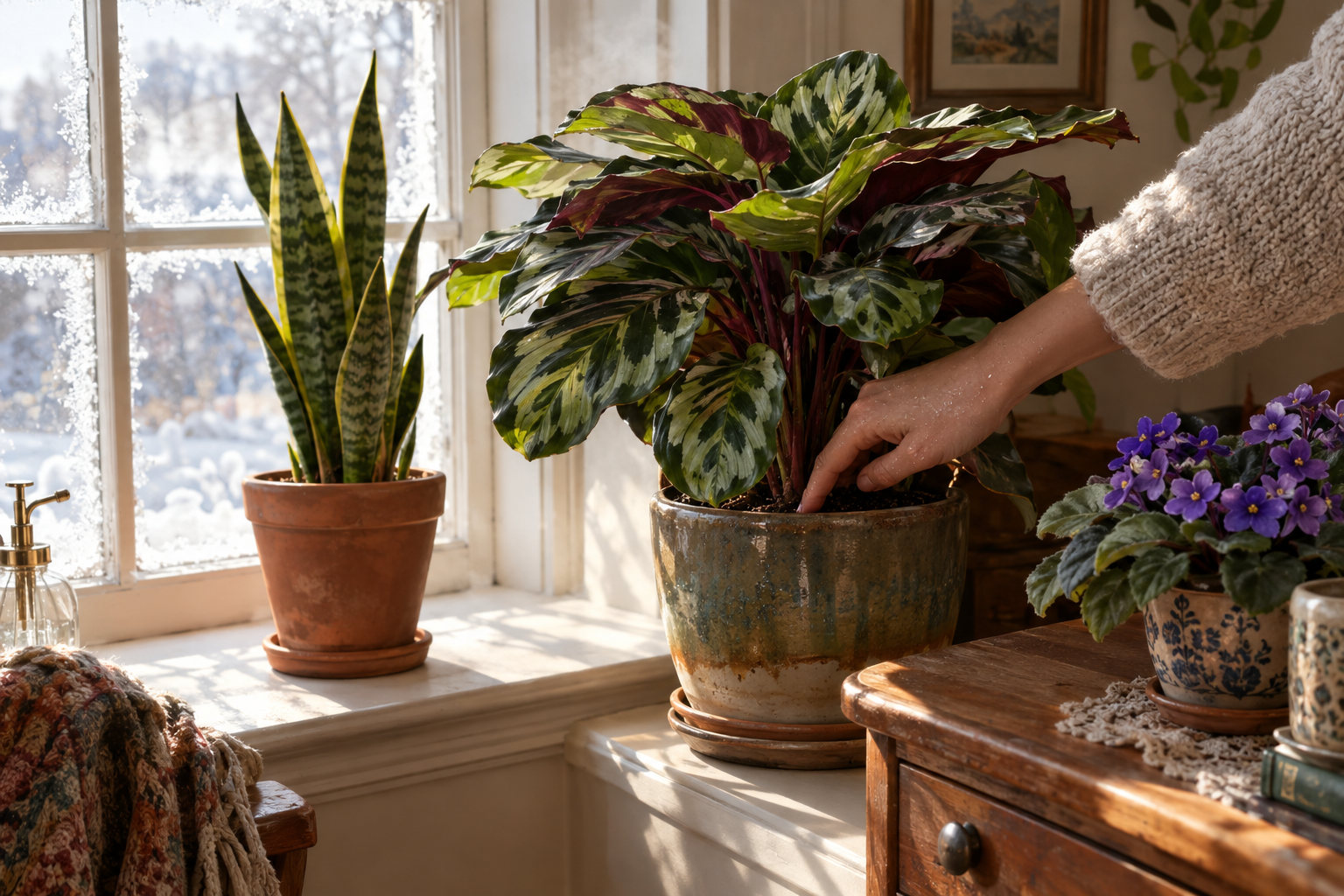

Wondering how often you should water houseplants in winter? The short answer is: usually less often than in spring or summer. Most indoor plants slow down in winter because light levels drop and cooler conditions reduce evaporation and water use. But there is no one-size-fits-all winter watering schedule. A snake plant in a cool spare room may need water only every few weeks, while a calathea in a warm living room may still need steady moisture.
That’s why the safest approach is to pair plant type with room temperature, then confirm with a quick soil check before watering. Below, you’ll find a practical winter watering matrix, plus the reasoning behind it, so you can avoid the most common cold-weather mistake: overwatering in winter.
Do Plants Need Less Water in Winter?
Yes, most houseplants need less water in winter. According to the RHS houseplant growing guide, indoor plants generally need careful, reduced watering in cooler months, with soil checked before more water is added. The reason is simple: most houseplants are growing more slowly, losing moisture more slowly, and taking up less water through their roots.
Why Growth Slows in Winter
Even when your home feels comfortable, winter changes the conditions around your plants. Shorter days and weaker light signal many houseplants to slow active growth. When a plant isn’t pushing out much new foliage or root growth, it simply doesn’t use water at the same rate.
This slowdown is especially noticeable in common foliage plants such as pothos, philodendron, and snake plant. A plant that dried out every 7 days in summer may now take 10, 14, or even 21 days to reach the same point.
If you’ve been following the exact same routine year-round, winter is when that habit can cause trouble. A fixed “every Sunday” watering schedule often becomes too frequent once growth pauses.
Impact of Cooler Temperatures on Plant Water Needs
Temperature matters almost as much as light. In cooler rooms, potting mix stays damp longer and roots absorb water more slowly. The RHS winter houseplant care advice notes that winter conditions call for extra care around watering, light, drafts, and heating.
That means a plant in a 59°F room may need substantially less water than the same plant kept at 68°F or 72°F. Warm rooms, especially those heated by forced air, can dry soil faster. But warm air does not automatically mean you should water on schedule. Always check the soil first.
As a simple comparison:
- A succulent in a cool room may go 3 to 4 weeks or longer between waterings.
- A tropical fern or calathea in a warmer room may still need water every 7 to 10 days if the top layer of soil dries out.
Exceptions: Plants That May Need Consistent Water Year-Round
Not every plant wants a dramatic winter dry-down. Some flowering houseplants and humidity-loving tropicals prefer more even moisture. For example, RHS guidance on Christmas-flowering houseplants notes that certain winter bloomers perform best when moisture is kept more consistent, though never soggy.
Plants that may need steadier winter moisture include:
- Calathea and other humidity-loving foliage plants
- Cyclamen while actively growing and blooming
- African violets
- Some orchids, depending on species and indoor conditions
Still, “consistent moisture” does not mean constantly wet soil. In winter especially, the goal is moist but aerated soil, not a heavy, waterlogged pot.
Winter Watering Schedule: How Often Should You Water Different Houseplants?
A practical winter watering schedule usually falls somewhere between every 1 and 4 weeks, depending on the plant and the room. Use the ranges below as starting points, not rigid rules. They work best when combined with a soil-moisture check and attention to winter light levels.
Watering Frequency for Succulents and Cacti
Succulents and cacti are the easiest group to overwater in winter. They store water in their leaves or stems and generally prefer to dry out fully between waterings. In winter, many are semi-dormant or fully dormant.
Typical winter range:
- Cool room, 50–60°F: about every 3 to 4 weeks
- Moderate room, 61–70°F: about every 2 to 3 weeks
- Warm room, 71–75°F: about every 10 to 14 days, but only if the soil is fully dry
If you grow snake plants or ZZ plants, they also lean toward this lower-frequency end, though they are not true cacti. They dislike sitting wet in winter. If you need a species-specific deep dive, link this article to your Snake Plant Care guide.
Watering Frequency for Tropical and Foliage Plants
Tropical foliage plants need more regular moisture than succulents, but they still usually need less water in winter than in summer. The RHS notes that plants like peperomia should not be overwatered and benefit from allowing the growing medium to dry somewhat between waterings.
Typical winter range for pothos, philodendron, monstera, dracaena, and similar plants:
- Cool room, 50–60°F: every 14 to 21 days
- Moderate room, 61–70°F: every 10 to 14 days
- Warm room, 71–75°F: every 7 to 10 days
Humidity-lovers such as calathea and some ferns often need slightly more frequent attention than tougher foliage plants, especially if indoor heating is drying the air. Even then, the better fix for crispy edges may be humidity support rather than simply watering more.
Watering Frequency for Flowering Houseplants
Actively blooming winter houseplants can use water more steadily than dormant plants. The RHS highlights special care for winter-interest and Christmas-flowering houseplants, including avoiding waterlogging while keeping the plant appropriately moist for flowering.
Typical winter range for cyclamen, African violet, bromeliad companions in pots, and seasonal bloomers:
- Cool room, 50–60°F: every 7 to 10 days
- Moderate room, 61–70°F: every 5 to 7 days
- Warm room, 71–75°F: every 4 to 6 days if actively flowering and drying faster
For example, an African violet in a warm kitchen may need water about weekly, while cyclamen in a cool room may hold moisture longer. Bottom watering can be useful for some flowering plants to avoid wet crowns or leaves.
Adjusting Watering Frequency Based on Room Temperature
Here’s the easy rule: the warmer the room, the faster the potting mix tends to dry. The cooler the room, the more cautious you should be. But temperature is only one part of the puzzle. Light exposure, pot size, pot material, drainage, humidity, and distance from radiators all affect how long soil stays wet.
A fiddle leaf fig at 55°F may need water only every 2 to 3 weeks. The same plant at 70°F, with brighter light and moving warm air, might dry enough for watering in 7 to 10 days. That doesn’t mean warm equals thirsty every time. It means the interval shortens if the soil is actually drying.
If your plants sit near cold glass or drafty windows, water even more carefully. Chilled, wet roots are a bad winter combination.
How to Avoid Overwatering in Winter
Overwatering in winter is more common than underwatering for most houseplants. The University of Maryland Extension on winter indoor plant problems notes that lower light and indoor conditions can contribute to stress and watering problems, while excess moisture can set the stage for rot. The best prevention is to stop watering by habit and start watering by evidence.
Symptoms of Overwatering in Winter
Common warning signs include:
- Yellowing leaves
- Soft or mushy stems
- Soil that stays wet for many days
- A sour smell from the pot
- Leaf drop despite wet soil
- Blackened or mushy roots if you inspect the root ball
These symptoms can overlap with underwatering, which is why diagnosis matters. If the potting mix is sodden and the plant looks limp, more water is not the answer. For a fuller troubleshooting breakdown, link readers to Root Rot vs Underwatering.
Best Practices for Winter Watering to Avoid Root Rot
Use these habits through winter:


- Check the soil first. The RHS recommends checking whether the compost surface has dried before watering again.
- Water thoroughly, then stop. When you do water, soak the root zone until water drains out, then empty saucers or cache pots.
- Never let pots sit in water. Standing water raises the risk of root rot.
- Use room-temperature water. Very cold water can stress roots; the RHS growing guide advises tepid water for houseplants.
- Match soil to plant type. Succulents need faster-draining mixes than ferns or calatheas.
- Slow down in lower light. If your home gets much dimmer in winter, reduce frequency accordingly. You can support this section with your Winter Light Levels article.
Tools and Methods to Assess Soil Moisture
You do not need fancy tools to water correctly in winter, though they can help.
- Finger test: Insert a finger 1 to 2 inches into the soil. If it still feels damp, wait.
- Lift-the-pot test: A dry pot is noticeably lighter than a wet one.
- Wooden skewer test: Insert a skewer into the root zone and pull it out. Damp soil will cling to it.
- Moisture meter: Helpful for larger pots or dense root balls, though readings can vary by soil type. [Editorial review: no allowed source in research directly validates consumer moisture meter accuracy; keep as practical suggestion only.]
If you spot soggy soil and yellow leaves, extend the interval between waterings and improve drainage conditions before adding more water.
Winter Watering Matrix: Plant Type and Room Temperature Guide
This matrix is designed as a quick-reference tool for real homes. It cross-references broad houseplant categories with common indoor winter temperature ranges. These frequencies are starting points grounded in RHS houseplant care guidance and winter watering principles; always confirm by checking soil moisture first.
How to Use the Watering Matrix
- Identify your plant category.
- Estimate the typical temperature in the room where it lives.
- Use the frequency range as a starting point.
- Check the soil before watering.
- Adjust if your plant gets unusually low light, sits near heating vents, or is in a very large or very small pot.
Think of this as a decision aid, not a strict calendar. A pothos in a warm, bright bathroom and a pothos in a dim office may need very different timing.
Examples of Matrix Entries for Common Houseplants
| Plant Type | Typical Winter Room Temperature | Recommended Watering Frequency | Why This Frequency Works |
|---|---|---|---|
| Succulents & cacti | 50–60°F | Every 3–4 weeks | Cool conditions and winter dormancy slow water use sharply; let soil dry fully to reduce rot risk. |
| Succulents & cacti | 61–70°F | Every 2–3 weeks | Warmer rooms increase drying slightly, but these plants still store water and need long gaps between drinks. |
| Succulents & cacti | 71–75°F | Every 10–14 days | Warm air speeds drying, especially in small pots, but only water once the mix is fully dry. |
| Snake plant / ZZ plant | 50–60°F | Every 3–4 weeks | These drought-tolerant plants are highly prone to overwatering in cool, low-light conditions. |
| Snake plant / ZZ plant | 61–70°F | Every 2–3 weeks | Moderate warmth increases moisture loss a bit, but soil should still dry deeply between waterings. |
| Snake plant / ZZ plant | 71–75°F | Every 10–14 days | Only suitable if the plant is actively drying out in a warm room; err on the dry side. |
| Tropical foliage (pothos, philodendron, monstera) | 50–60°F | Every 14–21 days | Lower temperature slows transpiration and root uptake, so soil remains moist longer. |
| Tropical foliage (pothos, philodendron, monstera) | 61–70°F | Every 10–14 days | Typical indoor winter range for moderate growth slowdown; allow the top 1–2 inches to dry first. |
| Tropical foliage (pothos, philodendron, monstera) | 71–75°F | Every 7–10 days | Warmer, heated rooms dry soil faster, though reduced winter light still means less water than summer. |
| Moisture-loving tropicals (calathea, fern) | 50–60°F | Every 10–14 days | These plants dislike complete drying, but cool rooms still require caution to avoid stagnant wet soil. |
| Moisture-loving tropicals (calathea, fern) | 61–70°F | Every 7–10 days | Maintain lightly even moisture while letting the surface dry slightly between waterings. |
| Moisture-loving tropicals (calathea, fern) | 71–75°F | Every 5–7 days | Warm, dry indoor air can speed moisture loss; humidity support may help prevent overcompensating with water. |
| Flowering houseplants (cyclamen, African violet) | 50–60°F | Every 7–10 days | Active blooming can keep water demand steadier, but cool roots still need excellent drainage. |
| Flowering houseplants (cyclamen, African violet) | 61–70°F | Every 5–7 days | Moderate warmth plus flowering often means more regular moisture, especially in smaller nursery pots. |
| Flowering houseplants (cyclamen, African violet) | 71–75°F | Every 4–6 days | Warm rooms can dry blooming plants quickly, but avoid keeping the pot constantly wet. |
| Indoor palms | 50–60°F | Every 10–14 days | Palms prefer even care but slower winter growth means less frequent watering than in brighter months. |
| Indoor palms | 61–70°F | Every 7–10 days | Moderate indoor warmth keeps palms drying at a steady but not rapid pace. |
| Indoor palms | 71–75°F | Every 7 days | Heated rooms can dry palm soil faster, especially near vents, so monitor closely without overwatering. |
Supporting references for category-level winter care include the RHS guide to indoor palms, the RHS calathea profile, the RHS dendrobium orchid guide, and the general RHS winter houseplant care page. [Editorial review: matrix intervals are synthesized from source-based category guidance and should be checked against final species examples before publication.]
Why Room Temperature Matters in Winter Watering
Room temperature changes how fast water leaves the potting mix and how actively roots absorb it. In a cool room, evaporation slows and growth often slows too, so water lingers longer around roots. In a warmer room, especially with central heating, soil can dry more quickly even while winter light remains weak.
That combination is why winter watering can feel confusing. Dry air may make leaves look stressed, but the roots may still be sitting in wet compost. If you respond only by watering more, you can easily trigger root problems.
In other words:
- Cool + dim: water much less often
- Warm + bright: water somewhat more often
- Warm + dim: check carefully; the surface may dry while the lower root zone stays wet
Frequently Asked Questions
How can I tell if my houseplant needs water in winter?
Check the soil, not the calendar. For many plants, the top 1 to 2 inches should dry before watering again. Also look at pot weight and how long the mix has stayed damp. In winter, many plants need less water than you expect.
Is it better to underwater or overwater plants during winter?
For most common houseplants, slight underwatering is safer than overwatering in winter. Wet, cold soil raises the risk of root rot, while a brief dry spell is easier for many plants to recover from. The main exceptions are moisture-loving tropicals and actively flowering plants, which still dislike drying too far.
How does room humidity affect winter watering needs?
Low humidity can make leaves crisp or brown at the edges, especially on calathea, ferns, and other tropicals. But humidity problems do not always mean the plant needs more water in the pot. Often, the better fix is a humidifier, pebble tray, or grouping plants together rather than increasing watering frequency.
Can I use the same watering schedule for all my houseplants in winter?
No. Succulents, snake plants, flowering houseplants, and tropical foliage all use water differently. Room temperature also changes how quickly soil dries. A single winter watering schedule for every plant usually leads to mistakes.
What are the signs of root rot caused by overwatering in winter?
Warning signs include yellow leaves, limp growth despite wet soil, a sour smell from the pot, and black or mushy roots. If you suspect root rot, reduce watering immediately and inspect drainage and root health.
Winter houseplant care gets easier once you stop asking, “How often should I water everything?” and start asking, “How quickly is this particular plant drying in this particular room?” Most plants do need less water in winter, but the exact schedule depends on plant type, temperature, light, and humidity. Use the matrix above as your starting point, then fine-tune with a quick soil check every time.
The payoff is worth it: fewer yellow leaves, less overwatering in winter, and healthier plants ready to grow again when light returns in spring.
What's Your Reaction?
