
Friendsgiving Timeline: Hour-by-Hour Schedule for 8 People

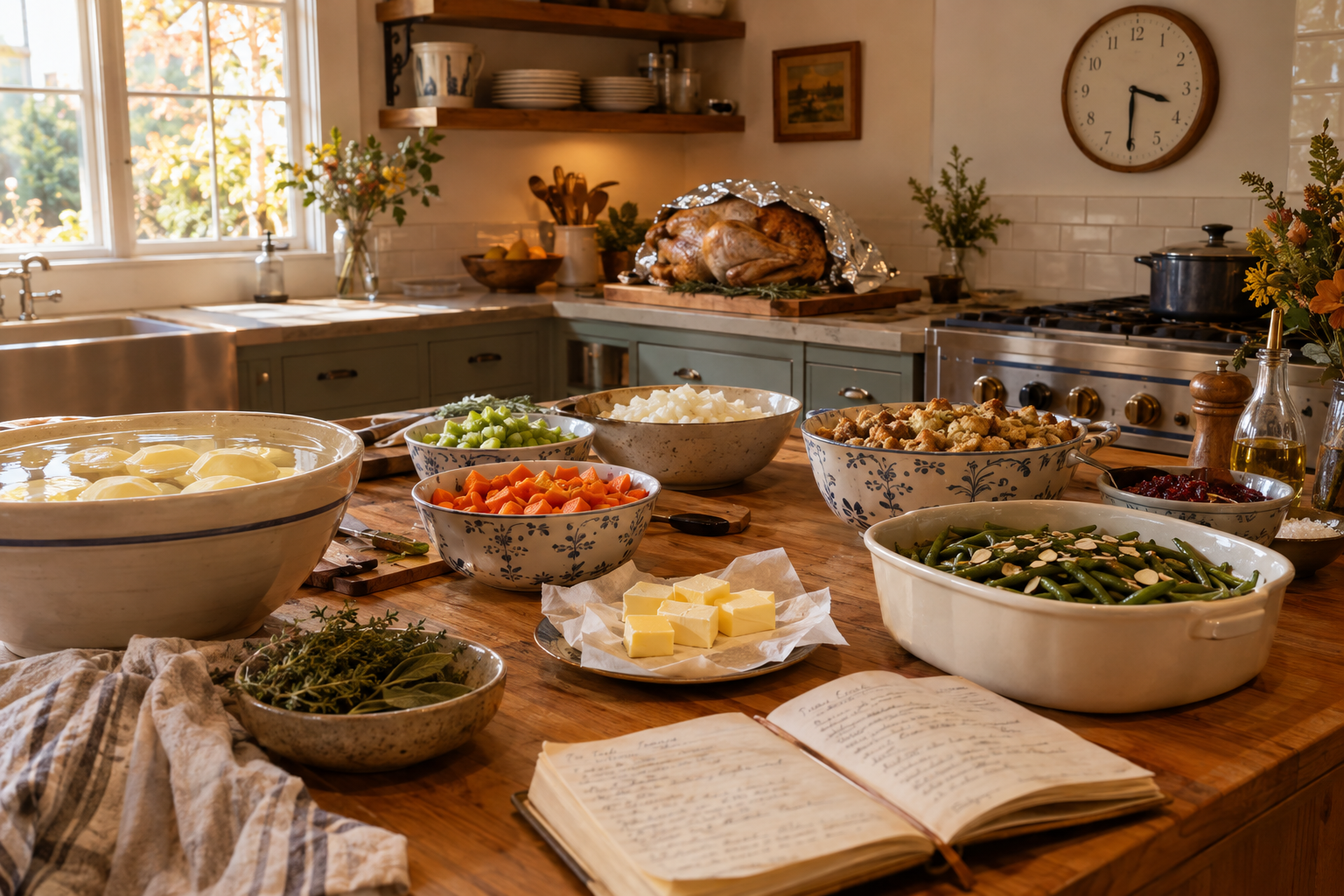

If you’re wondering when to start cooking for Friendsgiving for eight people, the short answer is this: start active day-of cooking about 4 to 5 hours before dinner, and do as much make-ahead prep as possible the day before. For a 6:30 p.m. meal, that usually means beginning around 1:30 or 2:00 p.m. if you’re roasting a small turkey or turkey breast and serving a few classic sides.
The part most hosts underestimate isn’t the recipes. It’s the timing. A turkey resting while stuffing needs the oven, mashed potatoes needing to stay hot without turning gluey, and two guests showing up with casseroles that also need reheating can create a very real traffic jam. That’s why a Friendsgiving timeline matters: it turns a fun dinner into a manageable schedule instead of a last-hour scramble.
Below, you’ll find a practical hour-by-hour Friendsgiving timeline for 8 people, a simple menu that fits the plan, and a clear who-brings-what setup so you can avoid duplicate dishes and oven conflicts.
What Is a Friendsgiving Timeline and Why Do You Need One?
Definition and Purpose of a Friendsgiving Timeline
A Friendsgiving timeline is a cooking and hosting schedule that maps out exactly when to prep, roast, bake, reheat, set the table, greet guests, and serve dinner. Instead of loosely planning to “start in the afternoon,” you assign real clock times to the meal.
That matters because Friendsgiving is rarely just one dish. Even for a group of eight, you’re often balancing a main, three or four sides, dessert, drinks, and whatever guests bring through the door. A timeline helps you see what has to happen in the oven, what can be made on the stovetop, and what can wait until the last 30 minutes.
Common Challenges Without a Timeline
Without a schedule, the same problems show up again and again:
- The turkey is done, but the sides are still cold.
- Two casseroles and the stuffing all need the oven at once.
- Mashed potatoes finish too early and sit out too long.
- Guests arrive with dishes that need reheating, but there’s no plan for space.
- The host is carving meat while trying to make gravy and answer the door.
A common Friendsgiving scenario: the host roasts the turkey until nearly serving time, then realizes the oven is still occupied when the stuffing and green bean casserole need 25 minutes at 350°F. Dinner slips by 40 minutes, everyone is hungry, and the host is stressed. A timeline fixes that by reserving oven slots in advance.
Benefits of Using an Hour-by-Hour Guide
An hour-by-hour guide gives you three big advantages:
- Better oven management: You know what bakes when.
- Less stress: You’re working from a plan, not improvising.
- Safer food service: Hot foods can be held properly and leftovers stored on time.
Food safety is part of the planning, too. According to the USDA, hot foods should be held at 140°F or warmer. The FDA also recommends not leaving perishable food out for more than 2 hours at room temperature, or 1 hour if it’s above 90°F. A real timeline makes it easier to serve food while it’s still hot and move leftovers into the fridge promptly.
Friendsgiving Timeline: Hour-by-Hour Schedule for 8 People
This sample schedule assumes:
- Dinner is served at 6:30 p.m.
- You are feeding 8 people
- The menu includes a small roast turkey or turkey breast, stuffing, mashed potatoes, a vegetable side, cranberry sauce, rolls, and pie
- You have one standard oven
- At least one or two dishes were prepped the day before
Because turkey size and recipe style vary, treat the exact times below as a planning framework, and confirm doneness with a thermometer. Safe minimum internal temperatures are listed by FoodSafety.gov’s safe minimum temperature chart.
Starting Point: 5 Hours Before Serving
1:30 p.m. — Start the host setup
- Clear counters and sink.
- Set out serving dishes and label them with sticky notes.
- Take butter, eggs, or dairy ingredients out if recipes need them closer to room temperature.
- Check refrigerator space for incoming guest dishes and leftovers.
1:45 p.m. — Pull prepped dishes from the fridge
- Remove assembled stuffing casserole or gratin-style sides so they lose some chill before baking later.
- Keep raw poultry separate from ready-to-eat foods to prevent cross-contamination, in line with basic food safety guidance.
2:00 p.m. — Preheat oven and prep turkey
- Preheat oven to 325°F.
- Season and prep turkey or turkey breast.
- Put stock, aromatics, and tools for gravy where you can reach them later.
2:15 p.m. — Turkey goes into the oven
- Roast the turkey.
- Set a timer to begin checking early rather than relying only on package timing.
- Use a food thermometer to confirm poultry reaches 165°F in the appropriate places before serving, per FoodSafety.gov.
2:20 to 3:15 p.m. — Use the “turkey oven” time for stovetop and cold prep
- Make cranberry sauce if homemade.
- Prep mashed potatoes: peel, cut, and hold in cold water if needed.
- Trim green beans or assemble salad components.
- Set up drinks station and chill beverages.
3:15 p.m. — Dessert check
- If pie was baked the day before, move it to a serving area.
- If dessert needs warming later, note a brief oven slot after dinner or serve it at room temperature to avoid pre-dinner oven competition.
3:30 p.m. — Table and appetizer setup
- Set the table fully.
- Arrange any no-cook appetizer, like nuts, olives, or a simple snack board.
- Skip anything too filling if dinner is only three hours away.
Oven Slot Scheduling to Avoid Conflicts
This is the part most guides skip: not every dish should fight for oven space right before serving. For eight people, the easiest strategy is:
- Main takes the oven first.
- Sides are assembled ahead.
- At least one major side is stovetop-only.
- Guest dishes should arrive hot, room-temp, or fully cooked and easy to reheat.
Here’s a practical oven-slot plan for a 6:30 p.m. dinner:
| Time | Oven Use | What You’re Doing Elsewhere |
|---|---|---|
| 2:15–5:00 p.m. | Turkey roasts at 325°F | Prep mashed potatoes, vegetables, drinks, table, appetizers |
| 5:00–5:20 p.m. | Turkey rests; raise oven to 350°F | Make gravy, boil potatoes, welcome early guests |
| 5:20–5:50 p.m. | Stuffing and casserole-style side reheat/bake at 350°F | Mash potatoes, sauté green beans, carve turkey setup |
| 5:50–6:05 p.m. | Warm rolls at 350°F if needed | Finish gravy and transfer sides to serving dishes |
| After dinner | Warm dessert briefly if desired | Coffee, tea, clearing plates |
Why this schedule works: the turkey comes out before the side-dish rush. While it rests, the oven becomes available for the stuffing and any casserole. Meanwhile, mashed potatoes and green vegetables stay off the oven entirely.
Best way to avoid oven conflicts: assign guest contributions that do not require your oven in the final hour. Ask friends to bring one of the following instead:
- Cold dessert
- Room-temperature appetizer
- Stovetop-ready side in a lidded pot
- Slow-cooker side
- Drinks, ice, or bread
If a guest absolutely must bring a casserole, ask them whether it arrives:
- fully baked and just needs 15 to 20 minutes to warm, or
- unbaked and requires a full 40+ minute slot
Those are two very different oven commitments, and knowing the difference ahead of time prevents a dinner-delay domino effect.
Illustrative rule of thumb: for a single-oven Friendsgiving, try to limit the final 60 minutes before dinner to no more than two oven-dependent items besides the turkey. This is a planning suggestion, not a formal standard.
5:00 p.m. — Check turkey and pull when done
- Once the turkey reaches a safe temperature, remove it from the oven.
- Tent loosely with foil and let it rest at least 20 minutes before carving.
- Increase oven to 350°F for sides.
5:05 p.m. — Start gravy
- Use pan drippings while the turkey rests.
- If gravy is done early, keep it hot rather than letting it sit at room temperature.
5:10 p.m. — Potatoes on the stove
- Boil mashed potatoes now so they finish close to serving time.
- Once mashed, hold covered in a warm pot, slow cooker, or heat-safe bowl over warm water if needed.
5:20 p.m. — Oven sides go in
- Stuffing/dressing
- Green bean casserole or baked vegetable side
5:30 p.m. — Guests start arriving
- Direct hot dishes to designated holding spots.
- Put cold dishes in the refrigerator if they won’t be served immediately.
- Keep hot foods at 140°F or above, per USDA hot holding guidance.
Final Hour Prep and Serving
5:45 p.m. — Finish stovetop vegetable and mash potatoes
- Sauté green beans, glaze carrots, or finish your non-oven veg side.
- Mash potatoes with butter and warm dairy.
- Taste gravy and adjust seasoning.
5:50 p.m. — Pull baked sides; rolls go in if needed
- Take stuffing and casserole out.
- Put rolls in for a quick warm-through.
- Move baked sides to the table or a warming area.
6:00 p.m. — Carve turkey
- Slice breast meat and separate dark meat if serving both.
- Arrange on a platter and spoon a bit of warm broth or pan juices over the top to keep it moist.
6:10 p.m. — Final assembly
- Transfer potatoes, vegetables, stuffing, gravy, and cranberry sauce to serving dishes.
- Open wine, fill water pitchers, place trivets and serving utensils.
6:20 p.m. — Call everyone to the table
- Do a fast temperature and timing check.
- Move anything perishable that won’t be served yet back to the fridge.
6:30 p.m. — Serve dinner
8:00 p.m. — Dessert and coffee
- Serve pie, crisp, or another simple dessert.
- If reheating dessert, use the now-empty oven.
By 8:30 p.m. — Pack leftovers
- Refrigerate perishable leftovers within 2 hours of serving, according to the FDA buffet safety guidance.
- Store leftovers in shallow containers.
- FoodSafety.gov recommends using leftovers within 3 to 4 days.
Friendsgiving Menu for 8: What to Cook and When
Suggested Menu Items for 8 Guests
A manageable Friendsgiving menu for eight should feel festive without overloading your oven. A balanced version looks like this:
- Main: 10- to 12-pound turkey, or turkey breast if you want a shorter cook time
- Side 1: stuffing or dressing
- Side 2: mashed potatoes
- Side 3: green beans or another vegetable
- Side 4: cranberry sauce
- Bread: rolls or sliced loaf
- Dessert: 1 pie plus whipped cream or ice cream
This menu is enough variety for eight without wandering into full holiday-feast excess. If your group likes plenty of leftovers, add one more side or a second dessert, but keep at least one of those items no-bake or make-ahead.
Make-Ahead vs. Freshly Cooked Dishes
The easiest way to answer “when should I start cooking for Friendsgiving?” is really: start some of it the day before.
Best make-ahead items:
- Pie
- Cranberry sauce
- Washed and trimmed vegetables
- Assembled stuffing casserole
- Table setup and serving platters
Best day-of items:
- Turkey
- Mashed potatoes
- Quick-cooked vegetable side
- Gravy
- Warm rolls
For make-ahead safety, refrigerate prepared foods promptly and reheat thoroughly before serving. FoodSafety.gov’s 4 steps to food safety and safe temperature resources are the best baseline here.


Adjusting Portions and Cooking Times
For eight adults, here’s a simple portion guide:
- Turkey: about 1 to 1.25 pounds per person if you want leftovers
- Mashed potatoes: about 4 to 5 pounds of potatoes total
- Stuffing: one 9×13-inch dish is typically plenty
- Vegetable side: 2 to 3 pounds total, depending on the veg
- Pie: one standard pie serves 8 modest slices; add a second dessert if your group is dessert-focused
Cooking time is where downsizing helps. A very large turkey can monopolize your oven and complicate the whole schedule. For a smaller Friendsgiving, choosing a smaller bird or a turkey breast often creates a smoother timeline. Exact roasting times vary by weight and recipe method, so always prioritize thermometer-based doneness over a fixed minute count.
Editorial note: Specific per-person turkey-weight recommendations vary by source and recipe style; use this as a practical planning estimate rather than a strict standard.
Who Brings What at Friendsgiving? Coordinating Contributions for 8 Guests
Tips for Dividing Dish Responsibilities
The simplest Friendsgiving plan is not making everything yourself. Even if you’re hosting, you should still assign contributions strategically.
Good Friendsgiving coordination means assigning by kitchen impact, not just by category. In other words, don’t only ask “Who wants dessert?” Ask:
- Does it need oven time?
- Does it need fridge space?
- Can it sit at room temperature briefly?
- Does it travel well?
The host should usually keep the items most tied to timing and food safety:
- Main protein
- Gravy
- One signature side
Guests are often better assigned:
- Dessert
- Appetizer
- Drinks
- Cranberry sauce
- Salad
- Bread
Sample Contribution Assignments
Here’s a sample who-brings-what Friendsgiving setup for 8 people:
| Person | Assignment | Kitchen Impact |
|---|---|---|
| Host | Turkey, gravy, mashed potatoes | High; controls main timeline |
| Guest 1 | Stuffing casserole | Medium; should arrive baked or ready for quick reheat |
| Guest 2 | Vegetable side | Low if stovetop or room-temp salad |
| Guest 3 | Cranberry sauce | Low; fully make-ahead |
| Guest 4 | Rolls and butter | Low; brief warming only |
| Guest 5 | Pie | Low; no oven needed before dinner |
| Guest 6 | Drinks and ice | Low; no kitchen competition |
| Guest 7 | Appetizer/snack board | Low; useful for arrivals |
Managing Overlap and Communication
To prevent duplicates and last-minute surprises, send one message a week ahead with:
- guest arrival time
- dinner serving time
- dish assignments
- whether dishes should arrive hot, cold, or room temp
- whether you have oven space for reheating
A simple text works:
“Dinner is at 6:30. If your dish needs the oven, tell me the temperature and how many minutes it needs by Thursday morning. Otherwise, please bring it fully cooked and ready to serve or easy to warm on the stovetop.”
That one message solves most Friendsgiving confusion.
If you’re trying to keep hosting costs in check alongside potluck planning, our Small Christmas Party Budget guide has ideas that work for low-key holiday gatherings too.
Frequently Asked Questions
How early should I start cooking for Friendsgiving?
For a Friendsgiving dinner served around 6:30 p.m., start active cooking about 4 to 5 hours before dinner, with prep work and make-ahead dishes handled the day before whenever possible.
What are the best dishes to prepare for 8 people?
A simple menu for eight is roast turkey, stuffing, mashed potatoes, one vegetable side, cranberry sauce, rolls, and pie. It’s festive, balanced, and manageable in one kitchen.
How can I avoid oven conflicts during Friendsgiving?
Have the turkey use the oven first, then let it rest while baked sides reheat. Keep at least one major side stovetop-only, and ask guests to bring dishes that don’t need your oven in the final hour.
Who typically brings what to a Friendsgiving?
The host usually handles the main dish and timing-sensitive items, while guests bring dessert, drinks, appetizers, cranberry sauce, bread, or low-maintenance sides.
Can Friendsgiving dishes be made ahead of time?
Yes. Pie, cranberry sauce, chopped vegetables, assembled casseroles, and table setup can often be done the day before. Reheat safely and keep hot foods at proper holding temperatures.
Conclusion
A great Friendsgiving for eight doesn’t require restaurant-level skill. It requires a plan. If you start cooking about 4 to 5 hours before dinner, prep key dishes in advance, and reserve your oven for the items that truly need it, the whole day gets easier.
The biggest win is knowing where your oven bottlenecks are before they happen. Roast the turkey first, shift sides into the turkey-rest window, keep one or two dishes off the oven entirely, and tell guests in advance what kind of dish travel and reheating setup works best. Add clear assignments, a realistic menu, and basic USDA-backed food safety habits, and your Friendsgiving can feel warm and relaxed instead of rushed.
That’s the real goal: good food, hot at the right time, with enough calm left over for you to enjoy your own party.
What's Your Reaction?
