
Weekly Reset Checklist (Printable + Step-by-Step Guide)

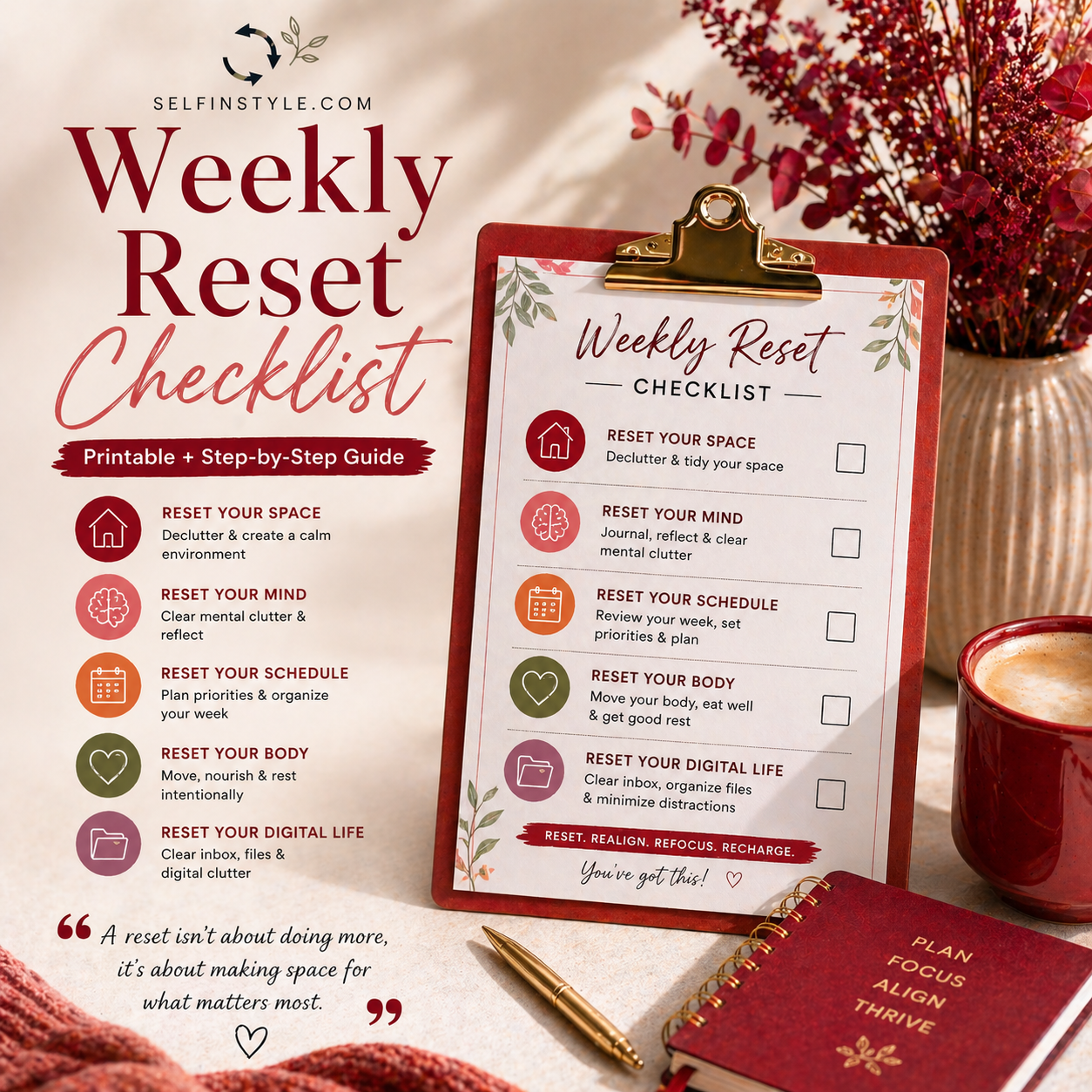

A weekly reset checklist is a simple, structured system you follow once a week to clean, organize, and mentally prepare for the days ahead. It helps you reset your space, your schedule, and your mindset—so you start the new week feeling clear, calm, and in control instead of overwhelmed.
Hey—Let’s Be Honest About Sundays for a Second
Hey! If your Sundays feel rushed, messy, or slightly chaotic—you’re not doing anything wrong.
For the longest time, I thought I needed more discipline, more planning, more productivity hacks. But what I actually needed was a reset.
Not a complicated one. Not a “perfect routine.”
Just a simple system that helped me close one week and step into the next—intentionally.
That’s exactly what this checklist became.
| TL;DR A weekly reset isn’t about doing everything—it’s about doing the right things consistently. When you reset your space, your priorities, and your mindset once a week, your entire week feels lighter, clearer, and far more manageable. |
Why a Weekly Reset Changes Everything
Most overwhelm doesn’t come from having too much to do. It comes from starting the week without clarity.
“Clarity precedes success.” — Robin Sharma
When I began resetting weekly, I noticed something shift. My Monday mornings stopped feeling heavy. Decisions felt easier. My space felt calmer. My mind followed. A weekly reset isn’t about productivity—it’s about creating alignment.
The Weekly Reset Checklist That Actually Works
Instead of overloading my Sundays, I simplified everything into a few essential categories. Each one supports a different part of your life.
1. Reset Your Space
I always start here, because your environment sets the tone for everything else. Take 20–30 minutes to:
- Declutter visible surfaces
- Reset your workspace
- Do a quick tidy-up (not a deep clean)
It’s not about perfection—it’s about creating a space that feels calm.
2. Reset Your Mind
Before planning the week, I clear mental noise.
“Your outer world is a reflection of your inner state.” — Eckhart Tolle
I usually journal or do a quick brain dump. Everything that’s been sitting in my head—tasks, worries, ideas—goes onto paper. It’s simple, but it creates instant clarity.
3. Reset Your Schedule
This is where everything comes together. Instead of planning every hour, I focus on:
- Key priorities for the week
- Important commitments
- 3 main goals
This removes the pressure to do everything and helps me focus on what actually matters.
4. Reset Your Body
A reset isn’t complete without taking care of yourself. For me, this looks like:
- Light movement or stretching
- Preparing meals or snacks
- Setting sleep intentions
It’s a reminder that your energy matters just as much as your schedule.
5. Reset Your Digital Life
This step is often overlooked—but it makes a huge difference. Take a few minutes to:
- Clear emails or organize inbox
- Delete unnecessary files
- Close unused tabs
A clean digital space reduces subconscious stress more than you realize.
Weekly Reset Breakdown
| Element | What It Does | Result You Feel |
| Space Reset | Clears physical clutter | Calm, focused environment |
| Mind Reset | Releases mental load | Clarity, reduced stress |
| Schedule Reset | Defines priorities | Direction, control |
| Body Reset | Supports energy | Better mood, consistency |
| Digital Reset | Removes background noise | Mental lightness |
Common Mistakes to Avoid
One mistake I made early on was trying to do everything perfectly. I turned my reset into a long checklist, which defeated the purpose. Another was skipping it when I felt “too busy”—which, ironically, was when I needed it most.
A reset should feel supportive, not exhausting.
Tips from Our Expert Desk
The most effective resets are the simplest ones. Keep your checklist short enough that you’ll actually follow it every week. Choose a consistent time—Sunday evenings tend to work best—and treat it as a ritual, not a task. And most importantly, don’t aim for perfection. Aim for consistency. — SelfinStyle Team
My Real-Life Weekly Reset Routine
My reset usually takes about an hour, sometimes less. I start by tidying my space, then sit down with a notebook and clear my mind. From there, I map out my week—focusing only on what matters most. I end with a small act of self-care, whether it’s prepping meals or just winding down early. It’s simple. But it works.


The Mindset Shift That Made This Stick
The biggest change wasn’t the checklist—it was how I viewed it. I stopped treating it like something I had to do and started seeing it as something that supports me.
“Success is nothing more than a few simple disciplines, practiced every day.” — Jim Rohn
That shift made all the difference.
Printable Weekly Reset Checklist
You can screenshot or recreate this:
Weekly Reset Checklist

- Tidy and reset space
- Brain dump / journal
- Plan top 3 priorities
- Review schedule
- Prep meals / self-care
- Clear inbox / digital clutter
Keep it visible. Keep it simple.
Frequently Asked Questions, Answered by an Expert
What is a weekly reset routine?
A weekly reset routine is a set of simple habits you follow once a week to organize your space, plan your schedule, and reset your mindset.
When should I do a weekly reset?
Most people prefer Sunday evenings, but any consistent time that works for you is fine.
How long should it take?
30–60 minutes is enough if you keep it focused.
Do I need to follow every step?
No. Customize it to your lifestyle, but keep the core idea—resetting space, mind, and priorities.
Why does a weekly reset work?
It reduces decision fatigue, creates clarity, and helps you start the week intentionally rather than reactively.
The Takeaway
A weekly reset checklist doesn’t change your life overnight. But it quietly changes how your days feel. Less rushed. Less reactive. More intentional. Because when you take the time to reset—even just once a week—you’re not just organizing your schedule. You’re creating space for a better life.
What's Your Reaction?
