
I Tried This Minimalist Night Routine for 7 Days—Here’s What Actually Improved My Sleep

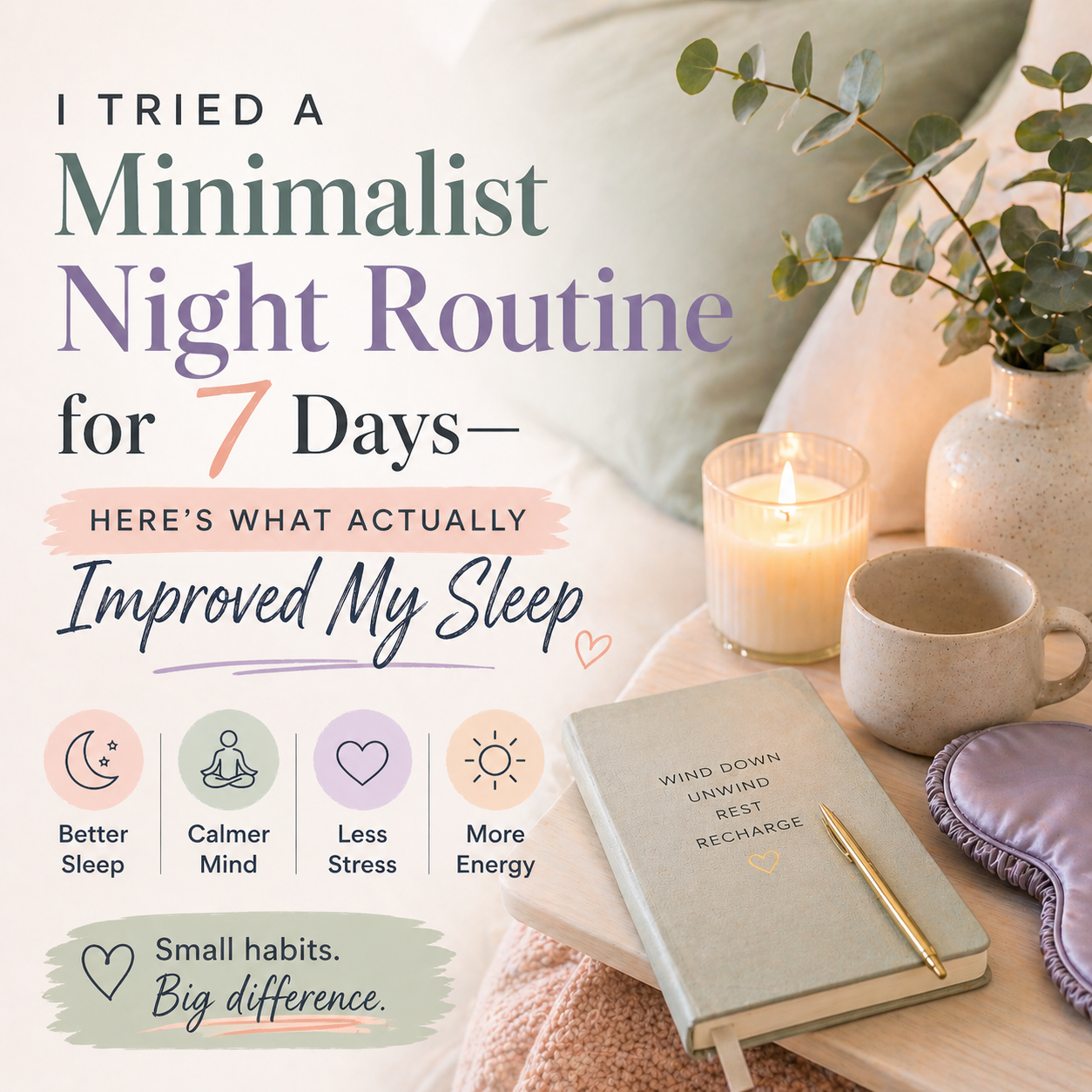

When I simplified my nights, my sleep improved almost immediately. This tried-and-true minimalist night routine helped me fall asleep faster by removing distractions, reducing screen time, and following the same calming sequence each evening. Within a few days, my mind stopped racing at night, and my body began to recognize when it was time to rest.
| TL;DR I didn’t fix my sleep by doing more—I fixed it by doing less. A minimalist night routine built around a few consistent habits helped me fall asleep quicker, wake up clearer, and feel calmer before bed. The real shift came from removing stimulation, not adding complexity. |
What I Mean by a Minimalist Night Routine
For me, a minimalist night routine isn’t about following a long checklist of wellness habits. It’s about creating a simple, intentional rhythm that gently transitions me from a busy day into rest. Instead of overwhelming myself with multiple rituals, I focused on just a few actions that felt calming and repeatable.
This shift made my evenings feel less like another task to complete—and more like something I actually looked forward to.
Why This Actually Worked for Me
What surprised me most was how much my sleep was being affected by overstimulation. My nights used to be filled with scrolling, notifications, and unfinished thoughts. Even when I was physically tired, my mind wasn’t ready to shut down.
As Matthew Walker explains, the brain needs to feel safe—not just tired—to fall asleep. Once I started reducing noise and creating a predictable routine, that sense of calm came naturally.
I also realized what James Clear often emphasizes—when habits are simple and consistent, they require less mental effort. That alone made a noticeable difference in how quickly I could relax at night.
What Changed After 7 Days
The changes weren’t dramatic overnight, but they were undeniable. I started falling asleep within minutes instead of lying awake for hours. I woke up less during the night, and mornings felt noticeably clearer.
What stood out the most was how calm I felt before bed. That usual restless energy—the urge to check my phone or think through everything—slowly faded. My nights became quieter, and my sleep followed.
The Minimalist Night Routine I Followed
Each evening, I started with a clear decision to end the day at a certain time. That boundary alone made a difference. Once I stopped working and disengaged from my phone, I dimmed the lights and allowed my environment to slow down with me.
I kept my routine intentionally simple. Some nights it was just a short skincare ritual and a cup of herbal tea. Other nights, I read a few pages of a book. The key wasn’t what I did—it was that I did the same type of calming activity every night.
Before getting into bed, I took a few minutes to clear my mind by writing down what I needed to do the next day. This helped me let go of lingering thoughts instead of carrying them into sleep. I always ended my night the same way, turning off the lights after a brief pause, which gradually became my signal to rest.
| Routine Breakdown | ||
| Element | Benefit | Time/Effort |
| Wind-down time | Helped me mentally switch off | Low |
| Screen reduction | Reduced stimulation | Medium |
| Calming ritual | Created a sense of ease | Low |
| Mental declutter | Quieted racing thoughts | Low |
| Sleep cue | Made sleep feel automatic | Very Low |
Mistakes I Almost Made
At the beginning, I was tempted to overcomplicate everything. I thought I needed a perfect routine with multiple steps, but that only made it harder to stick with. I also realized how easy it was to undo progress by checking my phone “just once” before bed.
Inconsistency was another challenge. On nights when I didn’t follow the same rhythm, I could feel the difference. It reinforced how important repetition is for building a reliable sleep pattern.
What I’d Do Differently
If I were starting again, I would focus even more on keeping things simple. The biggest impact came from reducing screen time, so I would prioritize that from day one. I’d also pay more attention to my environment—soft lighting and a calm atmosphere made everything feel more intentional.
Most importantly, I’d remind myself that this isn’t about perfection. It’s about creating a routine that feels natural enough to repeat every night.
What My Evenings Look Like Now
Now, my nights feel structured without being rigid. I naturally begin winding down at the same time each evening. I step away from my phone, dim the lights, and move into a quieter rhythm. A short ritual—whether it’s skincare or reading—helps me disconnect from the day.
By the time I get into bed, I don’t feel like I’m forcing sleep. It feels like the next logical step.
The Mindset Shift That Made the Difference
The biggest change wasn’t in the routine itself—it was in how I approached my evenings. I stopped treating sleep as something that just happens and started seeing it as something I prepare for.


By simplifying my nights, I reduced the pressure to “optimize” everything. Instead, I focused on consistency and calm. That shift made the entire process feel effortless.
Frequently Asked Questions, Answered by an Expert
Did a minimalist night routine really improve my sleep?
Yes. Once I reduced stimulation and followed a consistent routine, I started falling asleep faster and waking up feeling more rested.
How long did it take to see results?
I noticed small changes within a few days, with more consistent improvements by the end of the week.
What made the biggest difference?
For me, reducing screen time before bed had the most noticeable impact.
Did I follow the routine perfectly every night?
No, and that’s okay. What mattered was staying consistent most of the time.
Can anyone try this approach?
Yes. The key is to keep it simple and choose habits that feel natural to you.
The Takeaway
Improving my sleep didn’t require a complicated routine—it required a simpler one. By removing distractions and creating a calm, consistent rhythm at night, I gave my mind and body the space they needed to rest.
What started as a small experiment became something I now rely on daily. Because in the end, the real luxury isn’t doing more—it’s knowing exactly what to do, and keeping it simple.
What's Your Reaction?
