
Minimalist Daily Routine: Morning, Evening, and Weekly Reset (2026 Guide)

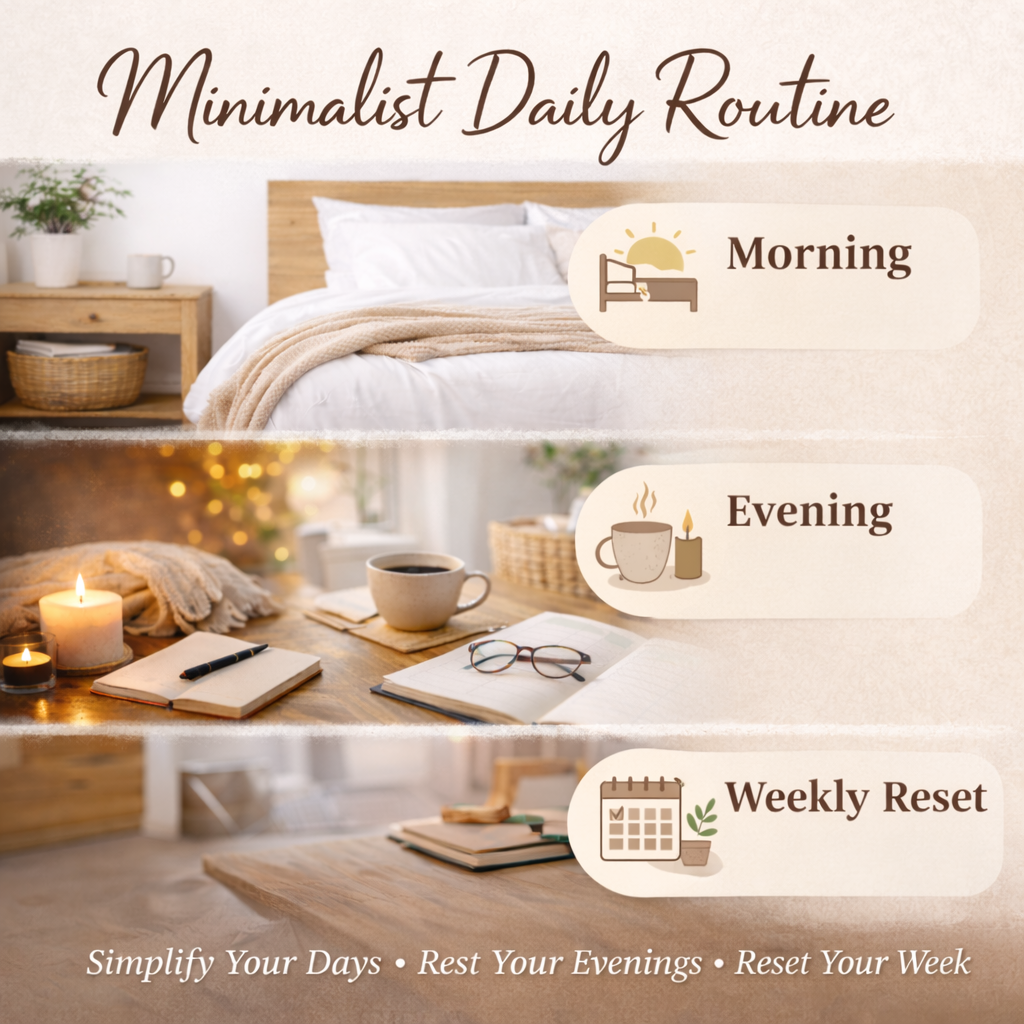

TL;DR
| A minimalist daily routine is about creating calm, not control. By gently structuring your morning, evening, and weekly reset, you reduce mental clutter, support better sleep, and make everyday life feel lighter. Start your day with intention, close it with simple resets, and use a weekly pause to realign your home, schedule, and mindset. Keep routines flexible, compassionate, and realistic—simplicity works best when it supports your life, not overwhelms it. |
If you’ve ever ended a day feeling busy but oddly unsatisfied, you’re not alone. I’ve spent over 20 years juggling work, family life, and the everyday responsibilities that quietly pile up. What I’ve learned—both personally and professionally—is that simplicity isn’t about doing less for the sake of it; it’s about doing what actually supports you.
A minimalist daily routine isn’t rigid or aesthetic for Instagram. It’s a practical, gentle structure that helps you move through your days with more calm, clarity, and energy—without constantly feeling behind.
This guide brings together morning, evening, and weekly reset routines into one realistic framework you can adapt to your own life.
What Is a Minimalist Daily Routine?
A minimalist daily routine is a set of intentional habits that reduce mental clutter, simplify decision-making, and create natural rhythms in your day and week.
Rather than filling your schedule with more tasks, minimalist routines focus on:
- Fewer, meaningful actions
- Consistent rhythms instead of strict schedules
- Supporting your energy—not draining it
Think of it as a quiet framework that holds your life together in the background.
Why Daily and Weekly Routines Matter More Than Motivation
Motivation comes and goes. Routines are what carry you through busy seasons, low-energy days, and weeks when life feels heavy.
When your routines are simple:
- Your home stays calmer without constant “catch-up” cleaning
- Your mind feels clearer because fewer decisions are required
- You stop relying on willpower and start relying on structure
This is especially important if you’re balancing family life, work, or caring responsibilities.
The Minimalist Morning Routine: Start Gently, Not Perfectly
Your morning doesn’t need to be productive to be successful. It just needs to help you arrive in your day.
A Simple Minimalist Morning Flow
You can complete this in 15–30 minutes.
- Wake without rushing
Avoid jumping straight into emails or social media. Even five quiet minutes helps your nervous system settle. - Make your bed or tidy one surface
This small reset creates an immediate sense of order. - Hydrate and open the curtains
Light and water are simple signals to your body that the day has begun. - Choose one anchor habit
This might be stretching, journaling a single line, or enjoying your tea or coffee in silence. - Decide on your one priority for the day
Not a to-do list—just the one thing that matters most.
A minimalist morning isn’t about doing everything “right.” It’s about beginning your day with intention instead of reaction.
The Minimalist Evening Routine: Close the Day Calmly
Evenings are where simplicity makes the biggest difference—especially for sleep and emotional well-being.
A Minimalist Evening Wind-Down
Aim for 20–40 minutes.
- Tidy as you go
Reset the kitchen or living space in small, quiet steps rather than leaving everything for tomorrow. - Prepare one thing for the morning
Lay out clothes, prep lunches, or clear your workspace. - Lower stimulation
Dim lights, reduce screen time, and choose calming activities. - Reflect briefly
Ask yourself:
- What went well today?
- What can wait until tomorrow?
- What went well today?
- Create a consistent bedtime cue
Reading, skincare, or stretching—something that tells your body it’s time to rest.
An effective evening routine doesn’t take long. It simply signals closure to your day.
The Weekly Reset: Where Simplicity Really Takes Hold
The weekly reset is where minimalist living becomes sustainable.
This isn’t about deep cleaning or planning every hour—it’s about setting your week up so it runs more smoothly.
A Simple Weekly Reset Routine
Set aside 60–90 minutes once a week.
1. Reset Your Home
- Clear surfaces
- Empty bins
- Tidy high-traffic areas
Focus on visible calm, not perfection.
2. Reset Your Mind
- Review the past week
- Note unfinished tasks without judgment
- Let go of what no longer matters
3. Reset Your Schedule
- Look at the week ahead
- Identify busy days
- Plan meals or outfits lightly
4. Reset Your Intentions
Choose one word or focus for the week ahead—rest, connection, progress, or ease.
This weekly pause prevents overwhelm from quietly building up.
How to Keep Your Routine Minimal (and Sustainable)
The most common mistake I see is trying to do too much at once.
To keep your routine supportive:
- Start with one habit per routine
- Keep time expectations flexible
- Adjust as life changes
- Let go of guilt when days don’t go to plan
Minimalism isn’t about control—it’s about compassion.
A Routine That Serves Your Life, Not the Other Way Around
Your routines should make your home feel easier to live in and your days feel lighter—not more demanding.


Whether you’re navigating family life, work, or a busy season, a minimalist daily routine offers something incredibly valuable: a sense of steadiness.
Start small. Keep it gentle. Let simplicity support you.

| The Takeaway A minimalist daily routine isn’t about doing more—it’s about doing what matters with less friction. When your morning helps you arrive calmly, your evening allows you to close the day with ease, and your weekly reset creates space to realign, life naturally feels more manageable. The goal isn’t perfection or rigid structure, but a gentle rhythm that supports your energy, your home, and your well-being. Start small, stay flexible, and let simplicity become the quiet foundation of your everyday life. Simplicity doesn’t change your life overnight—but practised daily, it changes everything. |
FREQUENTLY ASKED QUESTIONS, ANSWERED BY AN EXPERT
Q: What is a minimalist daily routine?
A: A minimalist daily routine is a simple, intentional set of habits that reduce mental clutter and support calm, everyday living.
Q: How long should a minimalist routine take each day?
A: Most minimalist routines take 15–30 minutes in the morning, 20–40 minutes in the evening, and about an hour weekly.
Q: Do I need to follow the routine exactly every day?
A: No, minimalist routines are flexible and meant to adapt to your energy and life changes.
Q: What’s the difference between a daily routine and a weekly reset?
A: Daily routines support your everyday flow, while a weekly reset helps you realign your home, schedule, and mindset.
Q: Can a minimalist routine work for busy families or working parents?
A: Yes, minimalist routines are ideal for busy lives because they simplify decisions and create supportive structure.
Q: How do I start a minimalist routine if I feel overwhelmed?
A: Start with one small, manageable habit and build gradually as it feels comfortable.
Q: Will a minimalist routine help with sleep and stress?
A: Yes, consistent and simple routines can improve sleep quality and reduce stress over time.
Q: Is a minimalist routine the same as productivity planning?
A: No, it focuses on well-being and ease rather than efficiency or output.
Q: How often should I review or change my routine?
A: Review your routine whenever your schedule, energy, or life circumstances change.
Q: Can minimalism still work if my home isn’t clutter-free?
A: Yes, routines can begin at any stage and naturally support a calmer, more organized home.
What's Your Reaction?
